What Are Woven Hearts in Denmark?
If you are walking around Copenhagen at Christmas, you may notice something rather lovely: red and white woven paper hearts hanging in windows, on doors and, most importantly, on Christmas trees.
In Danish they are called flettede julehjerter, or simply julehjerter.
They are one of those traditions that most Danes hardly need explained. Children learn to make them, families weave them together and old hearts are carefully unpacked again each December. A little piece of paper can somehow become part of a family Christmas for decades.
Why do Danes weave Christmas hearts?
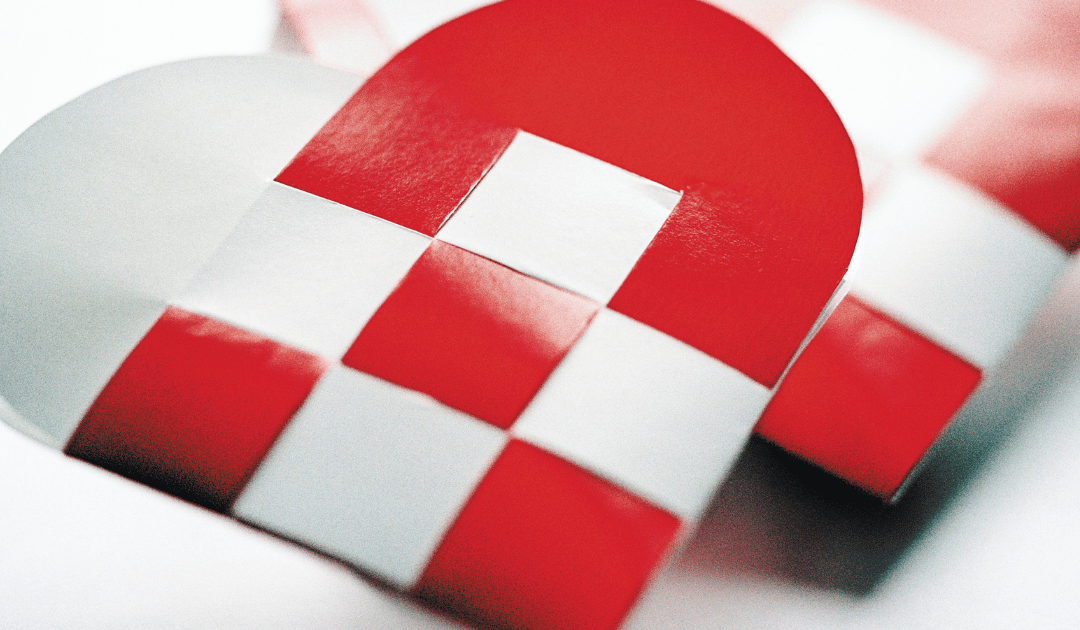
A traditional Danish Christmas heart is made from two folded pieces of paper. The pieces are cut into strips and woven through each other so that the finished heart becomes a tiny basket.
Red and white is probably the combination most people recognise, although Danish hearts come in many colours and patterns.
They hang on the Christmas tree and can hold a sweet, a nut or perhaps a small message.
But for me, the important part has never really been what goes inside the heart. It is what happens around the table while we are making it.
Hans Christian Andersen and the woven paper heart
The oldest known surviving woven paper heart was made by Hans Christian Andersen in the 1860s.
His heart looks rather different from the red and white Christmas hearts most Danes know today, but the connection is a lovely one.
Hans Christian Andersen is known around the world for stories including The Little Mermaid and The Ugly Duckling. The name Ugly Duckli was inspired by The Ugly Duckling, so I have always had a particular affection for the fact that his little woven heart is part of this story too.
A Christmas tradition, but also a heart
Danes tend to see the woven paper heart as Christmas before anything else.
Visitors from other countries sometimes see something different first. They simply see a heart.
I rather like that. The Danish julehjerte belongs completely naturally on a Christmas tree, but the shape itself speaks a language that travels very easily. Love, friendship, family and connection need very little translation.
What woven hearts mean to me
I have watched many people make their first heart over the years.
There is usually a moment when the weaving feels completely impossible. Then suddenly the strips begin to make sense, and a little heart appears in their hands.
But the part I remember afterwards is rarely whether the heart was perfect.
I remember the people around the table. We talk. We help one another. Someone laughs because they have woven a strip the wrong way. Someone else suddenly understands it and helps the person sitting beside them.
When we weave hearts, we weave ourselves into each other’s lives.
That is the part of the Danish Christmas heart tradition I would most like Ugly Duckli to help carry forward.
Discover the Danish Christmas heart
If you would like to learn more about the tradition, see how the hearts are woven or find my free illustrated guide, I have gathered it all on the main Danish Christmas Hearts page.
Experience the tradition in Copenhagen
If you are visiting Copenhagen and would like to experience the tradition rather than simply read about it, I welcome small private groups into my home in Frederiksberg.
We sit around my table for two unhurried hours. I tell some of the story behind the hearts, we talk a little about Danish Christmas and Hans Christian Andersen, and I help everyone weave their own hearts.
No previous craft experience is needed. In fact, seeing someone make their first successful heart is one of my favourite parts.
Sharing the tradition with a group
I also bring the Danish Christmas heart tradition out to companies, international teams, universities, organisations and communities in Copenhagen.
The group experience can be arranged for a defined group or as open heart weaving at a larger event. I bring the materials, tell some of the story behind the tradition and help everyone get started.
It is a simple and very human way for people from different countries to experience a Danish Christmas tradition together.
Can you make Danish woven hearts at home?
Absolutely.
You can begin with my free illustrated weaving guide, or use the Ugly Duckli DIY gift box, which contains our specially produced glossy paper and the materials for making 16 classic Danish woven Christmas hearts.
The materials are produced in Denmark, and the box is the same one I use when I teach the hearts myself.
A few questions about Danish woven hearts
What are Danish woven hearts?
They are small heart-shaped paper baskets made by weaving two folded pieces of paper together. In Denmark they are traditionally hung on Christmas trees.
What are they made from?
Traditionally they are made from paper. Red and white is especially familiar in Denmark, but woven hearts can be made in many colours and patterns.
Did Hans Christian Andersen make a woven paper heart?
Yes. The oldest known surviving woven paper heart was made by Hans Christian Andersen in the 1860s, although it looks different from the red and white Christmas hearts that later became familiar in Denmark.
Are Danish woven hearts only for Christmas?
In Denmark they belong very strongly to Christmas. Visitors from other countries often also see them simply as beautiful symbols of love and connection.
Can I learn to weave one myself?
Yes. Ugly Duckli has a free illustrated weaving guide, and I also teach the tradition through private and group experiences in Copenhagen.
Can I make Danish Christmas hearts outside Denmark?
Absolutely. That is one of the things I love about the tradition. Once you understand the weaving, a little Danish Christmas heart can be made almost anywhere in the world.

A small Danish heart with a rather big story.

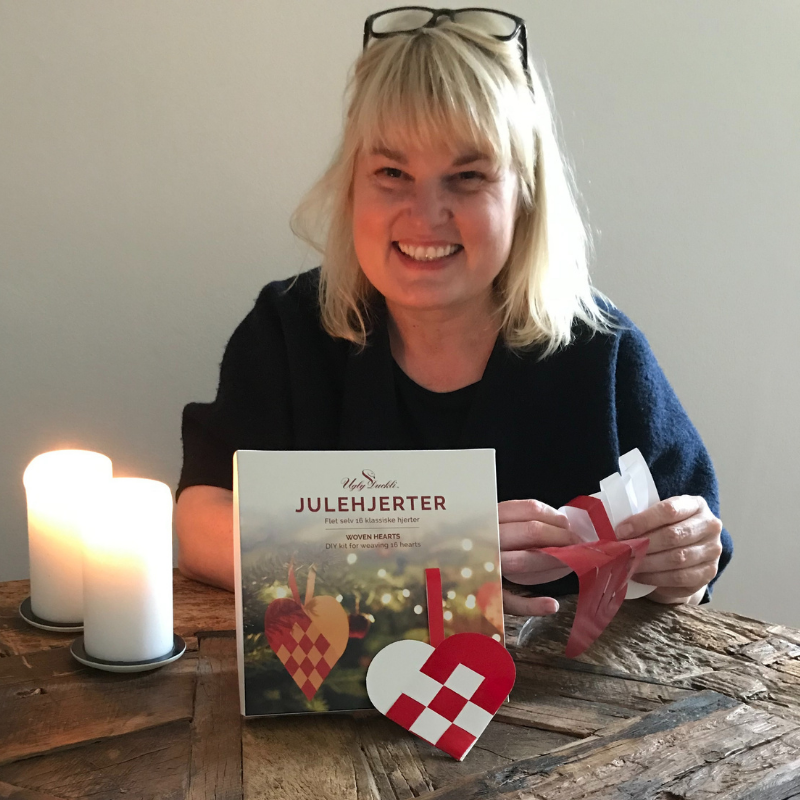
Rikke is the founder of Ugly Duckli in Frederiksberg, Copenhagen. She shares her love of the Danish tradition of woven Christmas hearts and the stories, memories and people connected to them.
Ugly Duckli is built around a simple idea: When we weave hearts, we weave ourselves into each other’s lives.
Rikke creates Ugly Duckli’s own paper heart designs and welcomes international guests into her Frederiksberg home for the Private Paper Heart Experience, where they learn to weave traditional Danish Christmas hearts.